LLM Fallback Chains for Provider Outages
Centralize fallback logic in a gateway to survive provider outages without duplicating retry code.
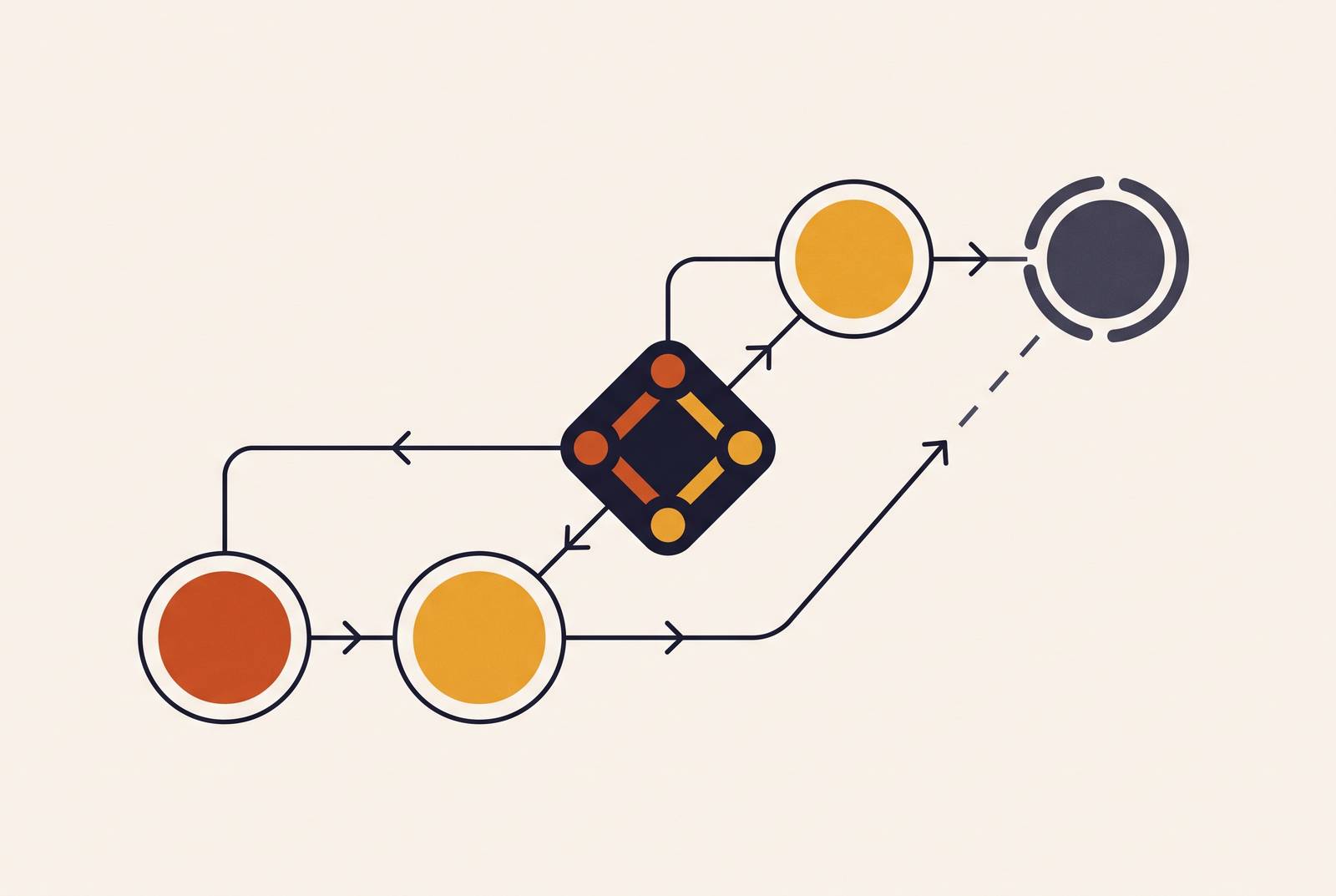
A fallback chain is an ordered list of backup targets, providers, models, or both, that an application works through when its first-choice LLM stops responding the way it should. Primary fails, the request moves to the next name on the list, then the next, until something answers.
Most teams get placement wrong before they've written a line of retry logic. They build fallback into each service instead of one shared layer, and that choice costs them later. A fallback chain belongs between the application and the provider, in a gateway or proxy. Bury the logic inside each service and you get five different versions of "retry and fallback," each with its own timeout values, its own error handling, its own opinion about chain order. One team's fallback triggers on a 500. Another's only triggers on a hard timeout. Neither team knows what the other did. Centralize it in the gateway instead, and there's one chain definition, applied the same way no matter which service sent the request.
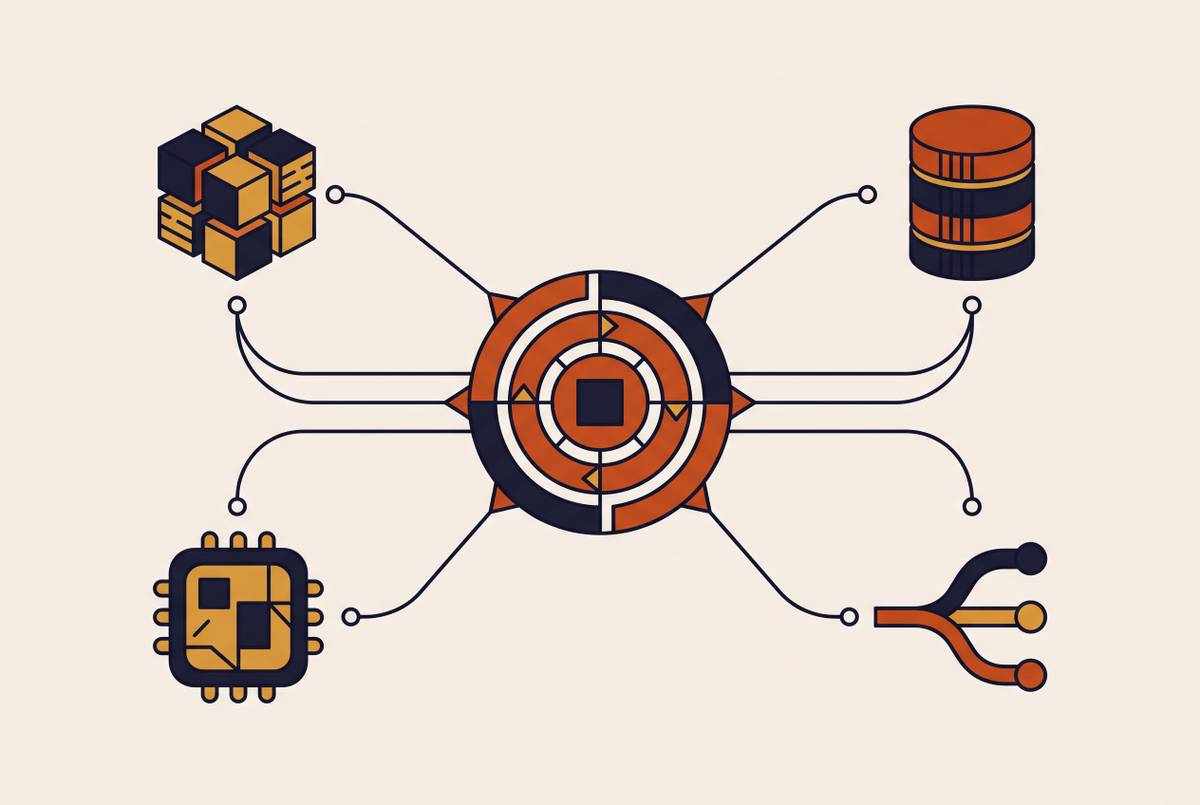
Four moving parts make up the chain: a primary target (the model the app wants under normal conditions), a set of fallback targets tried in order, trigger conditions (the specific error states that push a request from one target to the next), and a circuit breaker, which stops sending traffic to a provider once it's clearly down instead of making every request sit through a full timeout first.
A retry loop against the same provider just burns latency for no return; hammering a downed endpoint with the same request doesn't change the outcome. Load balancers spread traffic across targets that are already healthy, which is a related but separate job. A fallback chain exists for the moment a target stops being healthy and traffic needs somewhere else to go. Automatic routing based on cost or quality solves a different problem, and treating it as the same problem is how chains end up built with the wrong priorities baked in from day one.
Two layers is where fallback actually operates, and they behave differently. Provider-layer failover keeps the same model but switches who's hosting it: GPT-4o through Azure instead of OpenAI's own API, for instance. Fast, low-drama, same weights, same behavior, different pipe. Model-layer fallback swaps the model itself, which covers a wider range of outages but opens a much harder question: does the output still behave the way the application expects? Teams often treat these two layers as interchangeable, and that's usually where the trouble starts, because the assumptions that hold for a provider swap fall apart the moment the model itself changes.
Deciding which failure signals should trigger a fallback
Not every error means the provider is down, and this is where most chains get built wrong from the start. Fire the chain when it shouldn't, and it burns fallback capacity while papering over bugs that need actual fixing. Stay quiet when it should have moved, and users sit staring at a spinner.
Some signals are unambiguous. A 5xx response means the server broke on its end. A 429 means the provider is refusing traffic outright, rate limits or capacity limits, doesn't matter which; the chain should advance. Providers sometimes dress this up in their own language, an "Overloaded" response instead of a standard status code, but functionally it's the same 429 and deserves the same treatment. Connection timeouts belong here too: if the provider isn't answering at all, waiting longer isn't a strategy, it's just a slower way to fail.
Other signals should not move the chain, and this is the part teams get backwards most often. A 400-level error usually means something's wrong with the request itself, and the next provider in line will reject it for the exact same reason. Advancing the chain here just delays an error that was always coming. Content moderation refusals are trickier, since that's a policy call by the provider, not a sign it's unavailable. Push that request to a different provider and the app might get an answer the first provider would never have given, which is arguably a worse problem than the outage would've been. Context-length errors deserve the same pause. A smaller model further down the chain might genuinely fix it, but that has to be a deliberate design decision, never something that fires automatically off a single rejected request.
Timeout configuration does as much work as the trigger logic, and it's the piece that gets underrated most. A provider that's struggling but not fully down might hang a long time before it finally gives up. Set the timeout too generously and the fallback shows up late, after the user's already noticed something's wrong. Fail fast instead: tight enough timeouts that a degraded provider hands off before the delay becomes visible. Not every request needs the same budget, either. A live, synchronous API call needs a tight timeout; a background batch job can afford to wait.
Circuit breakers solve a scaling problem that trigger logic alone can't touch. Without one, every single request to a downed provider pays the full timeout cost before the chain even starts moving. At real volume, that's serious latency, not a rounding error. A circuit breaker tracks consecutive failures against a given provider and, once it hits a threshold, stops routing there entirely, sending requests straight to the next healthy target instead. It still needs a way back in, though: some periodic probe against the primary so the system notices recovery instead of sitting stuck on the fallback forever.
Ordering the chain: how to sequence providers and models so the fallback actually holds
Chain order isn't a coin flip. It's a set of priority calls about consistency, cost, and how fast recovery needs to happen, made explicit before anything breaks, not improvised in the moment.
A handful of patterns show up repeatedly in production. Provider-rotation keeps the same model family but switches the host, and it's usually the right first move in any chain because it preserves consistency almost completely. Model-downgrade steps to a smaller or cheaper model in the same family, useful once the primary's really gone and cost starts mattering more than exact parity. Retry-then-fallback allows one brief second attempt against the primary before moving on, which suits a transient blip but does nothing for a sustained outage. Cache-on-failure serves a previously successful response; works for read-heavy, low-personalization cases, falls apart for anything that needs a fresh, tailored answer. Manual-route hands the request to a human or an admin path, which matters most in regulated workflows where an automated substitution raises its own compliance problems.
Here's the part worth stating flat out, after watching enough of these chains get built the wrong way around: price should never decide chain order. Provider-layer fallbacks go first, because same-model-different-host preserves behavior without any extra prompt work. Model-layer fallbacks come after, since a different model needs real validation before it's trusted to run unattended. Sequence by how close a fallback's capabilities are to the primary's, full stop. A cheap fallback that returns output the app can't parse is a second outage wearing a disguise, and it costs more in debugging time than it ever saved in API fees. Cost still matters, just not here; it belongs in the decision about which chain gets used for a given request in the first place, not in how a single chain gets ordered once chosen.
Sometimes a chain needs more than one model family, not just more than one provider. That's justified when there's an actual track record of correlated failures, providers going down together during the same cloud incident, say. But mixing families means testing each one against the application's real prompts, not against a public benchmark leaderboard. A model that scores well on some published eval can still choke on the exact prompt structure a given app depends on.
One more thing worth saying plainly: the chain needs to be something a team can point to and explain, provider by provider. Opaque auto-routing, where a gateway silently decides on the app's behalf with zero visibility into why, leaves teams unable to answer basic questions about their own system. Teams debugging a quality regression, or working in a regulated space, need to know exactly which provider served a given request, every time, no exceptions.
The semantic consistency problem: what changes when the fallback model is different
Uptime isn't the whole job. Treating it as the whole job is the most common mistake in this entire area, and it's the one that costs teams the most goodwill once it surfaces. A fallback chain that keeps the lights on but quietly changes what the app produces hasn't fixed anything for the person on the other end of the request.
Semantic consistency means the fallback's output is compatible with what the application expects: format, tone, how well it follows instructions, how it handles things it shouldn't answer. Nobody expects a fallback model to be identical to the primary; that bar is impossible once model families change. Compatible is the right target, good enough that the code downstream doesn't break.
The breakage tends to show up in the same few places, over and over, based on the pattern of failures teams keep running into. Structured output is the most common one: if the primary reliably returns clean JSON and the fallback doesn't, the parser fails, and it doesn't matter how well-written the fallback's prose response was. System prompts are another; the same instructions land differently across model families, and a persona or constraint the primary respects might get loosely applied or ignored outright by the fallback. Refusal behavior varies too, since moderation thresholds aren't uniform across providers: a request the primary happily answers might get declined by the fallback, or the other way around. Token budgets differ as well, and a fallback with a smaller context window might truncate or reject a prompt the primary handled without complaint.
None of this is a reason to skip model-layer fallback. It's a reason to test for it on purpose. Maintain a prompt variant for each position in the chain, since the same instructions often need small adjustments to pull consistent behavior out of a different model. Define the output schema explicitly, and check every chain member against it before any of this goes live; for structured-output cases, format compliance should be a pass-or-fail gate, not an assumption baked in and hoped for. Write down the known behavioral differences between chain members somewhere the whole team can actually see, not just in the head of whoever built it.
There's a real judgment call buried in here, and glossing over it does more damage than getting it wrong. Some teams accept a best-effort fallback, output that's noticeably weaker but not broken, and absorb the quality gap somewhere in the application layer. Others treat any degradation as a failure and would rather show a clean error than a misleading answer. Neither position is wrong on its face. What's wrong is not deciding, and finding out which philosophy the system actually follows only after it's already shipped a bad answer to a real user.
Stateful context and conversational continuity across provider switches
Everything above applies to a single request. Multi-turn conversations add a failure mode that single-turn testing will never catch: the app can lose the thread entirely, right in the middle of a conversation, with no warning to anyone.
Here's the mechanism, plainly. The gateway routes the current message to the fallback provider, but the conversation history the primary was holding doesn't travel with it automatically. The fallback model sees the newest message and nothing before it. It answers as though the conversation just started. From where the user sits, the app appears to have forgotten everything said two minutes earlier, and it offers no explanation for why.
A benchmark published in July 2026, ContinuityBench, measured exactly this gap. Stateful proxy architectures, built to carry conversation history across a failover, kept continuity intact in the high nineties across hundreds of simulated failover events. Standard stateless setups preserved almost none of it. That gap is the difference between a system that's up and a system that's actually usable while it's up, and it's not a subtle one.
The stakes run highest in a few specific spots. Customer support, where the user already spent several messages explaining their problem before the switch happened. Agentic workflows, where later steps depend on tool calls and reasoning chained from earlier ones. Consumer-facing multi-turn chat generally, because context loss there is immediate and it reads as the product being broken, not just slow.
Fixing it comes down to where the conversation history actually lives. A gateway-level context store keeps history independent of any single provider and reinjects it explicitly whenever the chain switches targets. Application-level replay is the simpler version: the app just keeps the full message array and sends it with every call, at the cost of extra tokens on every single request, failover or not. A hybrid splits the difference: gateway holds the history, application decides how much of it is worth sending based on the token budget available.
That token cost isn't free, and it deserves to be stated directly rather than buried as a footnote. Replaying full context on every failover adds tokens to a request that's already degraded in some way, which adds cost and can bump against the fallback model's context window if that window runs smaller than the primary's. Deciding how much history is worth keeping, versus how much is safe to drop, has to happen before an incident, not while a support queue is filling up in real time.
Testing the chain before an incident: why an untested fallback is not a fallback
A fallback chain that's never carried real production traffic is a theory about how the system would behave. That's the whole reason this section exists, and it's the part teams skip most often because it never feels urgent until it is.
The failure mode is predictable enough to name in advance. A backup provider sitting untouched for months can develop credential drift, changed rate-limit tiers, or subtle prompt-behavior differences that only surface under real load, never under a synthetic health check. A post-mortem from Cisco ThousandEyes on a major AWS outage documented this exact pattern in "multi-region" architectures: backup regions existed on paper and had never actually been exercised under production conditions when the outage hit. The lesson carries over cleanly to LLM fallback chains, which fall into the exact same trap.
Routine drills need to cover more than "does it respond," and here's what that actually looks like, worked out the hard way by teams that skipped it the first time. Traffic promotion means sending a meaningful volume of real requests through each fallback position, well past pinging a health endpoint and calling it done. Latency validation confirms the fallback's p95 response time actually fits the application's tolerance; a fallback that technically answers but takes four times as long isn't available in any sense that matters to a user staring at a loading screen. Output compatibility means running the fallback's responses through the exact same validation the primary's output goes through, parsing the structured fields, checking the format, rather than eyeballing a sample and calling it fine. Credential and quota health means confirming, on a schedule, that API keys are live and that quota tiers at each fallback provider can actually absorb a real incident's worth of traffic.
Chaos engineering is the natural next step, and it belongs in the calendar as a standing practice, not a one-off exercise before a launch. Inject provider failures deliberately in staging and watch whether the chain advances to the right target, in the right amount of time. Test the circuit breaker directly: confirm it opens once the failure threshold hits, confirm it closes again once the provider comes back, rather than assuming the logic works because it reads fine in the code. Simulate a mid-conversation failover and check whether context actually survives the switch, since that's the exact failure mode standard load testing tends to miss.
Little of this is glamorous, and none of it shows results until the day it matters. That's the point of it. A fallback chain earns its name only after it's been forced to fail, on purpose, somewhere nobody's paying customers can see it happen.